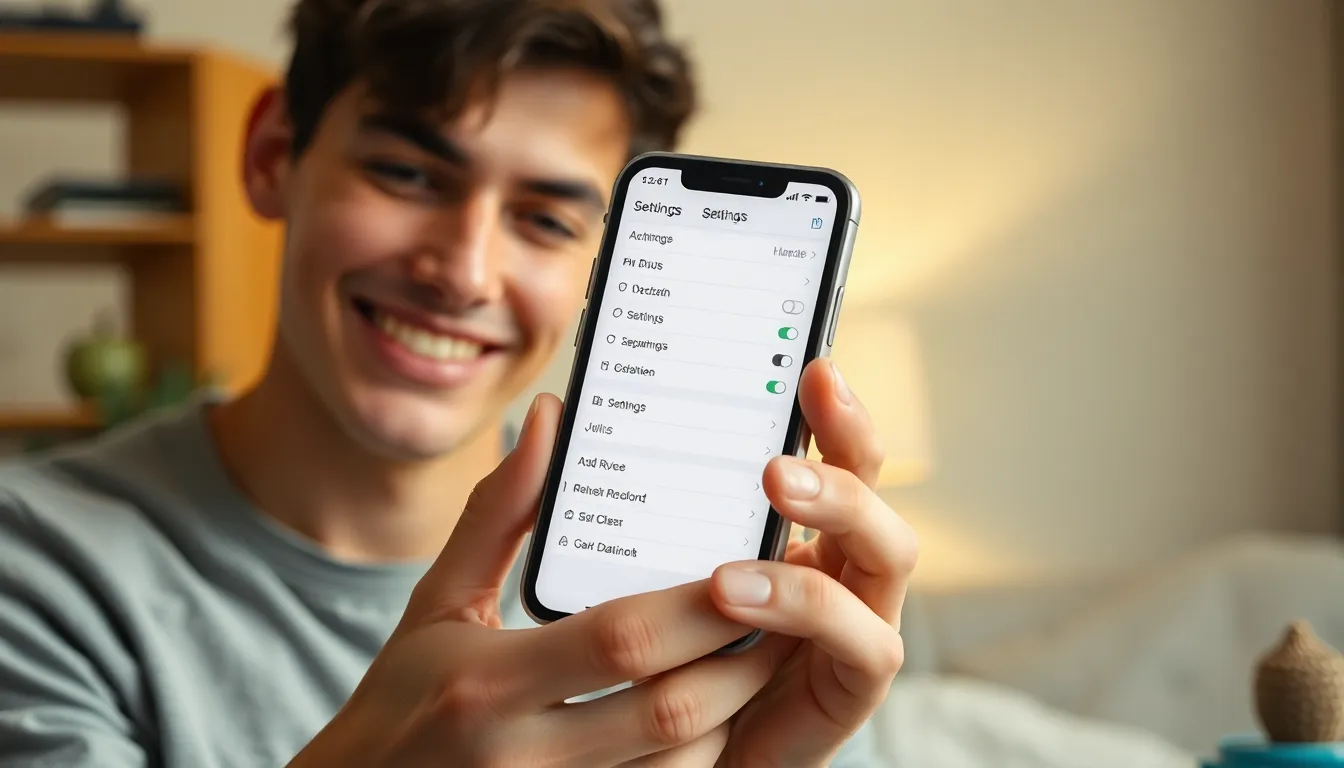

Ever found yourself in a room full of iPhones and wondered which one is yours? If your device name is still “John’s iPhone” or “iPhone 12,” it’s time for a change! Not only will a personalized name make your phone easier to spot, but it’ll also give you a chance to showcase your quirky personality. After all, why blend in when you can stand out?
Understanding Device Names
Changing the device name on an iPhone plays a significant role in personalization. A unique device name enhances identification among multiple devices in a network. It’s common for users to see default names like “John’s iPhone” or “iPhone 12,” which lack distinctiveness. These generic labels can make it tough to recognize the intended device, especially in larger environments like offices or homes.
Enhancing clarity in device names proves useful, particularly when connecting to Bluetooth or Wi-Fi networks. Users benefit from distinctive names since they simplify pairing with accessories. Examples of improved names include “Sarah’s Music Phone” or “Work iPhone,” indicating specific purposes or users directly in the title.
Feeling a strong sense of ownership often motivates people to personalize their devices. When users give their iPhones meaningful names, it fosters a stronger connection. Names may reflect interests, hobbies, or personal traits, allowing expressions of identity. This personalization enriches the overall user experience, making technology more relevant.
Understanding the implications of device names encourages thoughtful naming processes. Users can easily access device settings to change their iPhone’s name. It reinforces convenience when the iPhone matches personal or professional identities. Adopting distinctive device names elevates functionality while enhancing user engagement with devices.
Why Change Your Device Name?
Changing your device name can significantly impact identification and personalization. A unique name not only makes it easier to locate your device but also adds a touch of individuality.
Benefits of a Custom Device Name
Custom device names offer enhanced identification, particularly in crowded environments. Distinct naming simplifies finding your phone among many others in various settings. For instance, when connecting to Bluetooth speakers or Wi-Fi networks, a recognizable name aids in swift pairing. Convenience improves with names like “Emily’s Travel Phone” or “Gaming iPhone,” clearly indicating their primary use. Unique names also cultivate a sense of ownership as users see their device representing their personality, hobbies, or professional roles. Personalizing device names enhances user engagement and enriches the overall experience.
Situations That Require a Name Change
Several scenarios often warrant changing a device name. Newly acquired devices typically require personalization to reflect the owner’s style. When transitioning from personal to work use, adjusting the name enhances clarity. Different family members sharing a device should consider distinct labels to avoid confusion. Connecting to public networks may necessitate name modifications for better security and identification. If someone notices a generic name, such as “iPhone 13,” changing it to something approachable boosts recognition and ease of access. Adapting names to suit evolving preferences enriches the interface experience.
How to Change Device Name on iPhone
Changing the device name on an iPhone is straightforward and enhances personalization. Users can do this through the Settings app or with iTunes or Finder on a computer.
Via Settings App
Accessing the Settings app is the easiest method. Tap on “Settings” and then select “General.” From there, choose “About,” and you’ll see “Name” at the top. Tapping on “Name” allows for easy editing. Input a new name, then confirm the changes by tapping “Done.” This simple process quickly updates how the device appears to other users and devices.
Using iTunes or Finder
For users preferring to manage their iPhone via a computer, iTunes or Finder provides an option. Connect the iPhone to a computer using a USB cable. Open iTunes (or Finder on macOS Catalina and later). Select the iPhone icon that appears. In the summary page, locate the “Name” field. Enter a new name and confirm by pressing “Enter.” This method updates the device name on the iPhone and ensures consistency across connections.
Common Issues and Troubleshooting
Changing the device name on an iPhone can sometimes lead to difficulties. Users might encounter problems when the name doesn’t update immediately after making changes. Restarting the iPhone often resolves this issue, providing a fresh start for the device’s settings.
Bluetooth connections may behave unexpectedly after a name change. If a device fails to recognize the new name, forgetting the Bluetooth connection and re-establishing it generally helps. Users should go into Bluetooth settings, select the device, and choose ‘Forget This Device’ before reconnecting.
Some users experience complications while syncing with iTunes or Finder. These issues can arise if the software is outdated. Keeping iTunes or Finder up to date ensures compatibility. Install the latest updates to avoid syncing errors.
Different family members sharing a device might face confusion with generic names. In these cases, establishing a clear naming convention assists in identifying devices quickly. A system, such as including the user’s name or purpose in the device name, improves clarity.
Network recognition issues can happen with renamed devices. Settings should be reviewed to ensure the new name is visible on Wi-Fi and Bluetooth lists. If the device still shows the old name, resetting network settings may help. Navigate to Settings, select General, then Reset, and choose Reset Network Settings.
Individual customization sometimes requires third-party apps or profiles. Users should be cautious while installing apps that promise personalization, as they may not always function correctly. Verification through official channels is crucial for reliable changes.
Personalizing an iPhone’s name is a simple yet impactful way to enhance user experience. A distinctive name not only aids in device identification but also reflects personal style and preferences. Whether it’s for easier connectivity or just to stand out, the benefits of a unique name are clear.
Changing the device name is straightforward with the methods provided. Users can effortlessly update their iPhone’s name through the Settings app or via iTunes or Finder. With a few quick steps, anyone can make their device truly their own. Embracing this small change can lead to a more engaging and personalized interaction with technology.